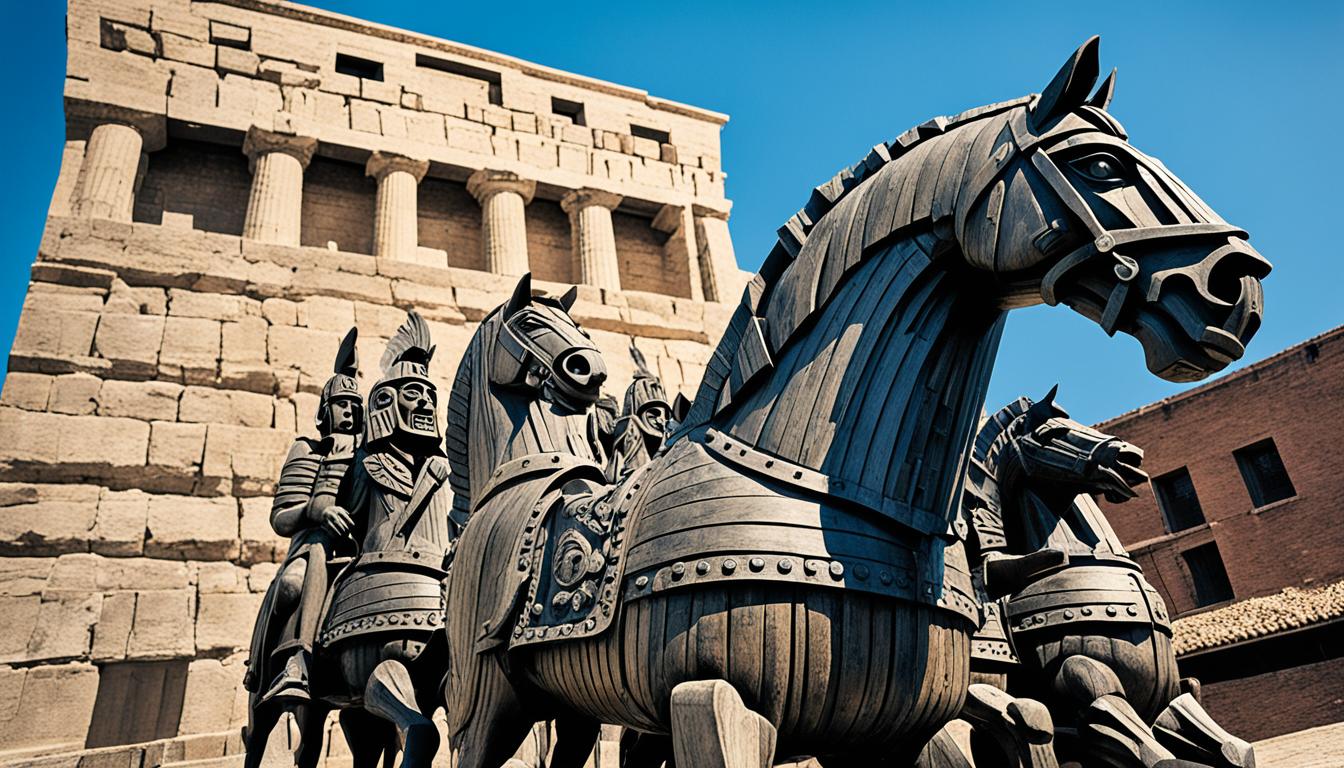
The story of the Trojan Horse has captured hearts for centuries, coming from ancient Greek mythology. It’s a tale of cleverness, trickery, and the fall of Troy. But was it really true, or just a myth?
We’ll look into the origins, evidence, and cultural impact of the Trojan Horse legend. We’ll explore the debate on its truth. From Homer’s poems to modern discoveries, we’ll uncover the truth about this famous tale.
We’ll dive into the Trojan War’s history and the myth behind the Trojan Horse. We’ll look at the evidence that makes people question its truth. By exploring its impact on art, literature, and culture, we’ll see how it still inspires us today.
Unraveling the Origins of the Trojan Horse Legend
The story of the Trojan Horse comes from Homer’s epic, the Odyssey. It tells of the Trojan War’s events. The Greeks, after a long siege, came up with a clever plan to get into Troy.
They built a huge wooden horse, hiding some soldiers inside. The Trojans thought it was a gift and brought it inside. Then, the Greek soldiers came out and opened the gates, letting their army in. This led to the city’s downfall.
Tracing the Mythological Roots
The story of the Trojan Horse has roots in Greek mythology. It combines the actions of gods and heroes into a thrilling tale. The horse is seen as a symbol of smart tactics and the strength of deception against strong defenses.
Over time, the Trojan Horse story has kept its magic, inspiring many in art, literature, and pop culture. Its lasting impact shows how this story still fascinates and moves people today.
The Trojan War: Fact or Fiction?
The Trojan War, a legendary battle between Greeks and Trojans, has always sparked debate. Historians and scholars find it fascinating. While it’s seen as a myth, evidence suggests a real war happened, though its details might have changed over time.
Excavations at ancient Troy in Turkey have found proof of a big settlement that was destroyed. This supports the idea that the Trojan War was real, not just a myth. These findings have given us new insights into the war’s scale and effects.
The stories of the Trojan War, with its heroes like Achilles and Odysseus, have become part of our culture. These epic tales have made the war famous, mixing fact and fiction together.
Today, experts still argue about the Trojan War’s truth. They offer different views and theories. Even if we can’t prove the war’s existence for sure, its lasting interest shows its importance in history.
Archeological Evidence of the Trojan Horse
Recent digs at ancient Troy have found evidence that makes the story of the Trojan Horse more believable. Scholars think a large, wooden structure found might be the famous horse. This discovery has sparked new interest in the legendary tale.
Excavations at Troy
Excavations at Troy in Turkey have fascinated historians and archaeologists. They’ve found many artifacts and structures that tell us about the city’s history and the Trojan War. A big, wooden structure found looks like the Trojan Horse from ancient Greek stories, like Homer’s Odyssey.
Theories and Speculations
Scholars are still debating what this wooden structure is. Some think it’s the real Trojan Horse. Others propose it could be a siege tower or a religious monument. This find has brought back the debate on the Trojan Horse’s existence and the Trojan War’s truth.
The Strategic Genius of the Trojan Horse
The debate on the Trojan Horse’s true story may go on, but its strategic brilliance is clear. This ancient Greek tactic of hiding soldiers in a giant wooden horse was a stroke of genius. It showed the military skill and cleverness of the ancient Greeks.
This strategy proved the tactical depth of ancient warfare. The Greek warriors knew how to use psychological tactics and deception well. They surprised their enemies, used their own confidence against them, and won the war.
Military Tactics of Ancient Times
The Trojan Horse was not just a myth but a real strategy. The ancient Greeks were great at changing their tactics to beat their enemies. They always looked for new ways to get ahead.
The Horse’s success came from using the Trojans’ psychology against them. The Greeks made the Trojans think the horse was a sign of their victory. This trick led to Troy’s downfall, showing the Greeks’ deep knowledge of psychological warfare.

The Trojan Horse’s strategy still fascinates and motivates today’s military leaders and historians. It highlights the creative and flexible nature of ancient Greek warfare. It shows how they could think creatively and come up with tactics that beat even tough enemies.
History: The Enduring Legacy of the Trojan Tale
The story of the Trojan Horse has gone beyond ancient myths, becoming a key part of our culture. The legacy of the trojan horse shows in its big impact on art, literature, and popular culture. It symbolizes cleverness, trickery, and smart planning.
Today, “Trojan Horse” means a hidden danger or a way to sneak in. This shows the impact of trojan horse story as a lasting and widely known metaphor. It warns us about being too easygoing and the need to stay alert.
The cultural significance of trojan horse story is deep in our society. It has been adapted and referenced in many ways. From Homer’s epic poems to today’s movies, the Trojan Horse has kept people interested for ages.
Its lasting appeal shows the power of strategy, trickery, and the risks of being too proud. The story still teaches us about the value of being clever and careful.
The Trojan Horse’s legacy still affects us today. It reminds us of the power of smart thinking and the need to watch out for dangers. Its ongoing effect on our culture proves its lasting value and its continued importance in our world.
Cultural Influences and Adaptations
The story of the Trojan Horse has deeply influenced art, literature, and pop culture. It has been seen in ancient Greek sculptures and modern films. Works like Virgil’s Aeneid and Shakespeare’s Troilus and Cressida have made the Trojan Horse a cultural icon.
Visual arts have long been fascinated by the Trojan Horse. Ancient Greek sculptures and frescoes show the Greeks emerging from the horse to attack Troy. Artists like Luca Giordano and Vincenzo Camuccini have painted the horse, showing its lasting appeal.
Trojan Horse in Literature and Pop Culture
The Trojan Horse has also been a part of many literary works. Virgil’s Aeneid gives a detailed account of the horse’s role in Troy’s fall. Shakespeare’s Troilus and Cressida explores themes of deception, war, and love.
Recently, the Trojan Horse has appeared in popular culture too. It’s been in video games like Age of Empires and Assassin’s Creed, and TV shows like Hercules and Xena: Warrior Princess. This shows how the legendary story still captivates audiences today.

The story of the Trojan Horse has evolved over time, thanks to cultural adaptations. It continues to inspire new interpretations in art, literature, and pop culture. The Trojan Horse remains a powerful symbol, captivating people worldwide.
The Symbolic Power of the Trojan Horse
The symbolic meaning of the Trojan horse goes beyond its ancient myth. It has become a symbol of deep meaning. It teaches us about the dangers of being too trusting and the power of deception.
This story is full of trojan horse metaphors and allegories. It helps us understand complex ideas like politics, war, social issues, and technology threats.
The image of a wooden horse hiding a secret danger is well-known. It makes us think about human nature and the world’s complexities. The Trojan Horse is often seen in art, books, and movies. It warns us about the risks of being careless and the dangers of deception.
Metaphors and Allegories
The symbolic meaning of the Trojan horse is used as a metaphor for many real-life situations. It stands for political tricks, economic harm, and the risks of technology flaws. This symbol shows us the importance of being careful and alert to hidden threats.
Today, the trojan horse metaphors and allegories apply to cyber threats. Hackers use harmless-looking software to break into systems. The Trojan Horse reminds us that what seems safe might actually be dangerous. It teaches us to be careful and think critically.
The symbolism of trojan horse still captures our imagination and makes us think about hidden dangers. It teaches us to be alert in our personal, political, and tech lives. The story of the Trojan Horse shows the lasting impact of stories and the lessons they teach us.
Modern-Day Parallels and Lessons Learned
The story of the Trojan Horse is still very relevant today. It teaches us valuable lessons about current challenges. The idea of a hidden threat in something that seems harmless is common in many areas. This includes cybersecurity and international conflicts.
This ancient tale reminds us to stay alert and think critically. We should question anything that seems too good to be true. By learning from the Trojan Horse story, we can better handle today’s complex problems. This helps us avoid being too trusting and understand the need for smart planning.
The Trojan Horse story is still important in many areas, like military strategies and diplomatic talks. By looking at this story, we can spot and prevent deceptions. This helps us be more prepared and flexible in dealing with today’s issues.